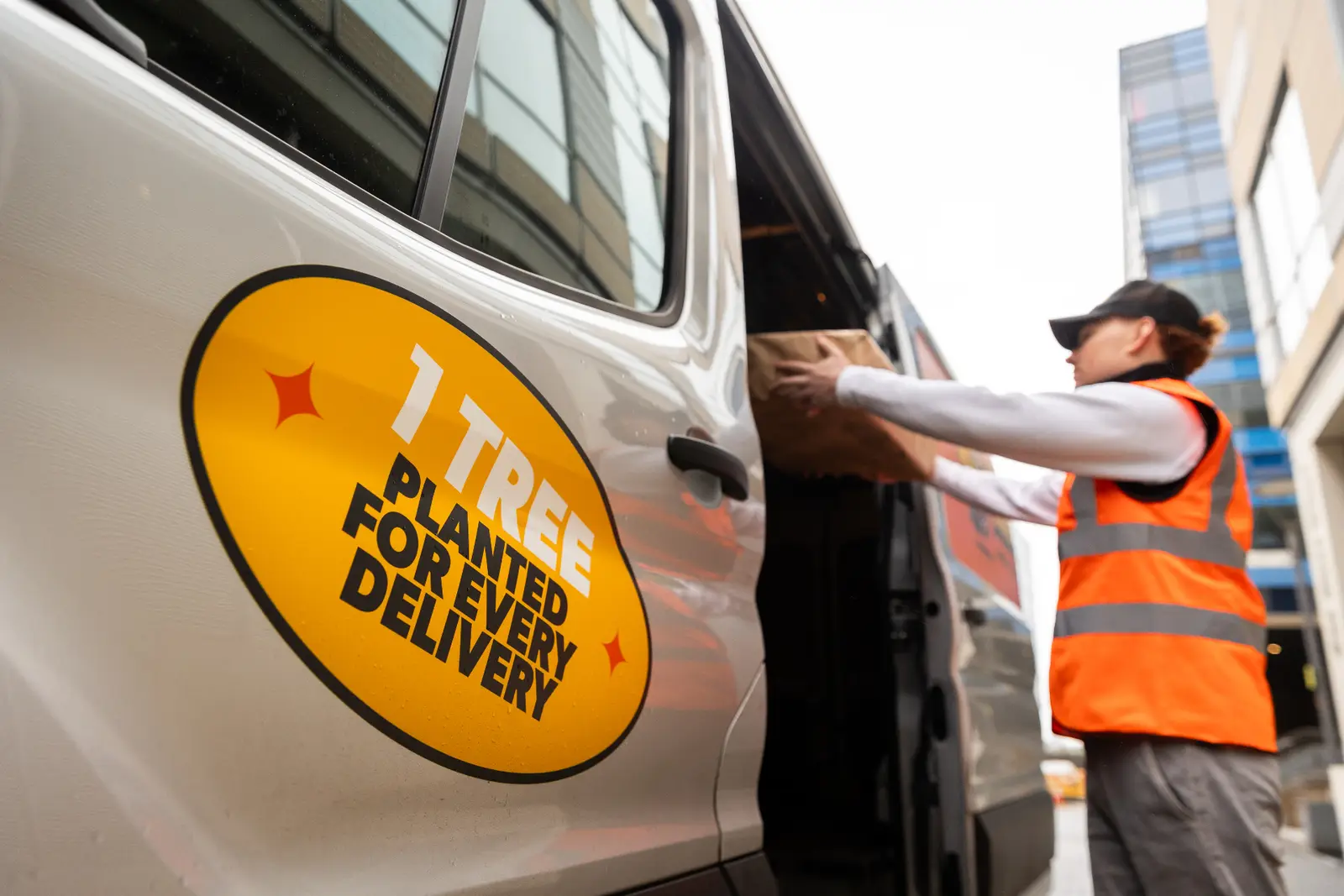
Reducing Carbon Footprint in Your Supply Chain

Supply chain emissions account for over 60% of total business carbon output for most companies. If you're serious about sustainability, logistics is where to focus.
Understanding Your Logistics Emissions
Before you can reduce emissions, you need to measure them. Your logistics carbon footprint comes from:
- Vehicle fuel consumption — the largest single contributor
- Empty running — vehicles travelling without cargo between jobs
- Failed deliveries — re-attempts that double the emissions for a single shipment
- Warehouse operations — heating, lighting, and equipment at distribution centres
7 Practical Steps to Reduce Your Footprint
1. Consolidate Shipments
Two half-full vans produce twice the emissions of one full van. Work with your courier to batch shipments heading to the same area.
2. Choose Carbon-Neutral Couriers
Look for couriers with independently verified carbon-neutral credentials — not just self-reported offsetting. Send It Direct holds Carbon Neutral Britain certification.
3. Use Cargo Bikes for Urban Deliveries
For inner-city deliveries under 100kg, cargo bikes produce zero direct emissions and are often faster than vans in congested areas.
4. Optimise Packaging
Oversized packaging means fewer items per vehicle and more journeys. Right-size your packaging to maximise vehicle utilisation.
5. Reduce Failed Deliveries
Every failed delivery attempt doubles the emissions for that shipment. Provide accurate addresses, contact numbers, and delivery instructions.
6. Plan Ahead When Possible
While same-day delivery is sometimes essential, planned deliveries allow couriers to optimise routes and consolidate loads — reducing per-shipment emissions.
7. Track and Report
What gets measured gets managed. Request carbon data from your courier partners and include logistics emissions in your sustainability reports.
The Commercial Benefit
Reducing your supply chain carbon footprint isn't just ethical — it wins business. More tenders now include sustainability scoring, and B2B buyers increasingly choose suppliers with genuine green credentials.