Flatbed Transport: When You Need One and What It Can Carry
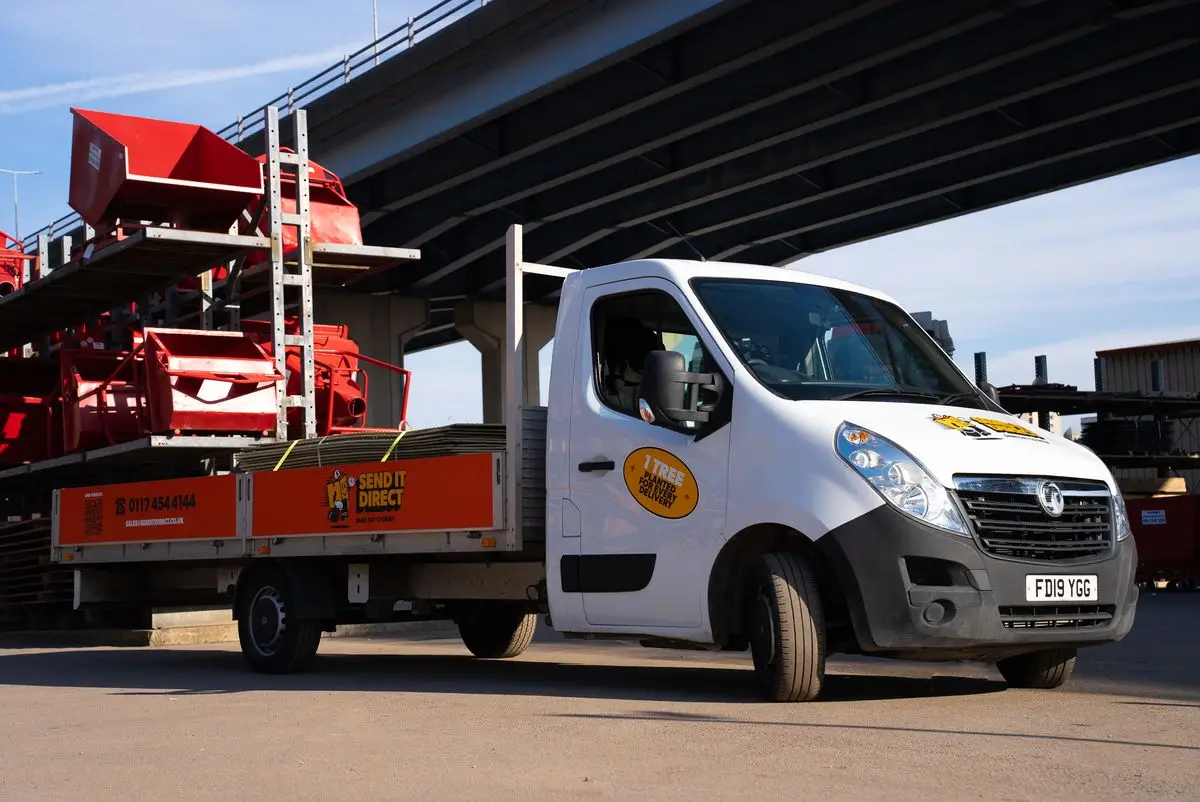
A flatbed is an open-deck vehicle with no sides or roof, used to carry large, heavy or awkwardly shaped loads that won't fit inside a standard enclosed van — and that need to be loaded or craned on from the side or top. From excavators and pallets of building materials to industrial machinery and oversized equipment, flatbed transport handles the jobs an ordinary courier simply can't. If you've ever needed to move something too big, too heavy or too irregular for a van, this is the service you were looking for.
Here's when a flatbed is the right choice, what it can carry, and how to book one.
What is flatbed transport?
Flatbed transport uses a vehicle with a flat, open loading deck instead of an enclosed box. Because there are no sides or roof, items can be loaded from any direction — lifted on by forklift or crane, or driven on where appropriate. That open access is the whole point: it makes flatbeds ideal for loads that are heavy, long, tall or an unusual shape.
Flatbeds come in a range of sizes, from smaller flatbed vans and 7.5-tonne trucks for modest loads up to articulated flats and low-loaders capable of carrying 25 tonnes or more. The right one depends on the weight, dimensions and access at both ends of the journey.
What can a flatbed carry?
Flatbeds are among the most versatile vehicles on the road. Typical loads include:
- Plant and construction machinery — excavators, dumpers, loading shovels, rollers and telehandlers moved to and from site.
- Building and landscaping materials — palletised bricks, blocks, timber, steel and aggregates.
- Industrial machinery and equipment — production machines, generators, tanks and heavy fabricated items.
- Oversized or awkward loads — anything too long, wide or tall for an enclosed vehicle, such as beams, containers or portable buildings.
- Agricultural equipment — tractors, implements and other farm machinery.
If a load is heavy, needs crane or forklift access, or simply won't fit through the doors of a van, a flatbed is almost always the answer.
When should you use flatbed transport?
Choose a flatbed when any of the following apply:
The load is too big or heavy for a van. Standard vans top out quickly on both weight and dimensions. Once you're moving plant, pallets in volume, or machinery, you need an open deck built for it.
It needs to be craned or forklifted on. Open-deck access from the side or top is essential for many industrial and construction loads — a box van makes that impossible.
It's an awkward shape. Long, wide or irregular items that can't be safely enclosed travel best strapped to a flat deck with the right securing and, where needed, an escort.
You're servicing a construction or plant site. Flatbed transportation is tailored to construction demands — getting equipment and materials to sites reliably, whether in a city centre or a remote location.
The construction, plant hire, manufacturing and agricultural sectors are the heaviest users, but any business that occasionally needs to move something large benefits from knowing a reliable flatbed operator.
How flatbed loads are kept safe and legal
Moving heavy and oversized loads isn't just about having the right vehicle — it's about doing it safely and within the law. A professional operator handles:
- Correct securing — load-rated straps, chains and blocking so nothing shifts in transit.
- Weight distribution — loading to stay within axle limits and keep the vehicle stable.
- Route planning — checking for height, width and weight restrictions, and arranging notifications or escorts for abnormal loads where required.
- Loading coordination — arranging HIAB (crane-equipped) vehicles or forklift access at each end.
This is where an experienced flatbed and haulage service earns its value: the difference between a smooth delivery and a dangerous, delayed or non-compliant one comes down to expertise.
How to book flatbed transport
Booking is straightforward when you provide the right details up front. Have ready: the item's weight and dimensions, what it is, how it can be loaded and unloaded (crane, forklift, driven), the collection and delivery addresses, and any site access constraints. The more accurate this information, the more likely the right vehicle arrives first time — saving you cost and delay.
For urgent needs, flatbed transport can often be arranged the same day, in the same way as a same-day courier — just with the muscle to move a much bigger load.
The bottom line
Flatbed transport exists for the loads nothing else can handle: heavy, oversized, awkward or crane-loaded items that would never fit in a van. Whether you're moving plant to site, machinery between premises, or a one-off oversized item, the key is matching the load to the right size of flatbed and working with an operator who handles securing, routing and access properly. Get those right, and even the biggest, most awkward move becomes routine.
Frequently asked questions
What is a flatbed used for? A flatbed is used to transport large, heavy or awkwardly shaped loads that won't fit inside an enclosed van — such as plant machinery, building materials, industrial equipment and oversized items — and that need to be loaded by crane or forklift from the side or top.
What is the difference between a flatbed and a low-loader? A flatbed has a raised flat deck suited to general heavy and palletised loads, while a low-loader sits closer to the ground to carry very tall or very heavy plant and machinery that would exceed height limits on a standard flatbed.
How much weight can a flatbed carry? It depends on the vehicle. Smaller flatbed vans and 7.5-tonne trucks handle modest loads, while articulated flatbeds and low-loaders can carry 25 tonnes or more.
Can flatbed transport be arranged same day? Yes. For urgent jobs, flatbed transport can often be booked and completed the same day, subject to vehicle availability and the size of the load.
What information do I need to book a flatbed? Provide the item's weight and dimensions, what it is, how it will be loaded and unloaded, the collection and delivery addresses, and any site access restrictions so the right vehicle is sent first time.
Got a heavy or awkward load to move? Get a flatbed transport quote from Send It Direct and we'll match the right vehicle to your job.